Choose the method for the jacket you have
A soft blazer for a weekend needs a different packing decision from a sharply built jacket for a ceremony. Start with the garment rather than the smallest possible bundle. Empty the pockets, undo the buttons and check the care label. A brooch, a pen or a bulky pocket can leave an impression under pressure.
The shoulder fold below suits many ordinary woven blazers. If your jacket has rigid padding, fragile trim, beading or a lining that catches when you move it, stop when you feel resistance. A roomy garment compartment, or wearing the jacket during the journey, may be the more practical choice. Do not force a delicate shoulder into a shape it resists.
For a knitted blazer or cardigan, a straightforward loose fold is often easier. Keep the distinction between woven tailoring and knitwear in mind: Woolmark's care guidance recommends supportive hangers for woven wool and folding for wool knits.
Fold at the shoulders, not through them
Use a clean, dry surface with enough room to spread the jacket. The Victorinox packing guide describes the shoulder-nesting approach; this is a compact version of that method.
- Lay the unbuttoned blazer face down and smooth the sleeves.
- Gently turn one shoulder inside out, keeping the fabric relaxed.
- Bring the other shoulder across and nest it in that reversed shoulder. The jacket is now narrower, with much of the outer fabric protected inside.
- Straighten the lapels and let the sleeves lie alongside the body. Do not push a sleeve into a tight ball.
- If the jacket will not fit lengthwise, bring the lower half up in one broad fold. Avoid pressing a sharp crease across the middle.
Try the movement once before departure. If the lining twists, open the jacket out and start again; pulling harder will not make a better package. You can also leave it in a larger, looser fold if your case has space. Compactness is useful only while the jacket keeps a comfortable shape.
Make room before you close the case
A careful fold cannot compensate for a crowded bag. Put the jacket on an even layer of soft clothing. Keep shoe soles, buckles, toiletry containers and other hard edges away from it. A strap should hold the contents steady, not cut a line into a lapel.
Before closing the case, check these three points:
- Can the lid close without you leaning on it?
- Are the shoulders supported rather than flattened beneath another heavy item?
- Can you remove the jacket first when you arrive?
If the answer is no, remove a less useful item or change the packing arrangement. For a short trip, plan the outfits before filling the bag. One blazer that works with the trousers, dress and shoes you are taking may be enough; use the method in our capsule wardrobe guide to check the combinations rather than packing several jackets just in case.
A quick decision before departure
Open the question that describes your jacket. These notes are a last check after the steps above, not a score for how tightly you can pack.
Choose the gentler arrangement
Packing checkThe shoulders nest without resistance
Keep the lapels smooth, make only the broad fold the bag needs, and leave space above the jacket.
The shoulder or lining resists
Open the jacket out again. Do not pull harder. Use a larger loose fold, a suitable garment compartment or wear it for the journey.
The bag needs pressure to close
Rearrange or remove an item before closing. A tighter strap or a smaller compression cube is not a substitute for space.
Give the blazer space when you arrive
Take the jacket out early instead of leaving it folded until the event. Hang an ordinary woven blazer on a hanger that supports its shoulders and let the fabric settle. Men's Wearhouse also recommends unpacking a blazer promptly. Keep knitwear folded when hanging would stretch it.
If you need heat or steam, follow the garment's care instructions. Do not put a hot iron directly on an unfamiliar fabric or hold a steamer against decorative details. For an important event and a delicate jacket, ask about suitable professional pressing rather than experimenting immediately before leaving.
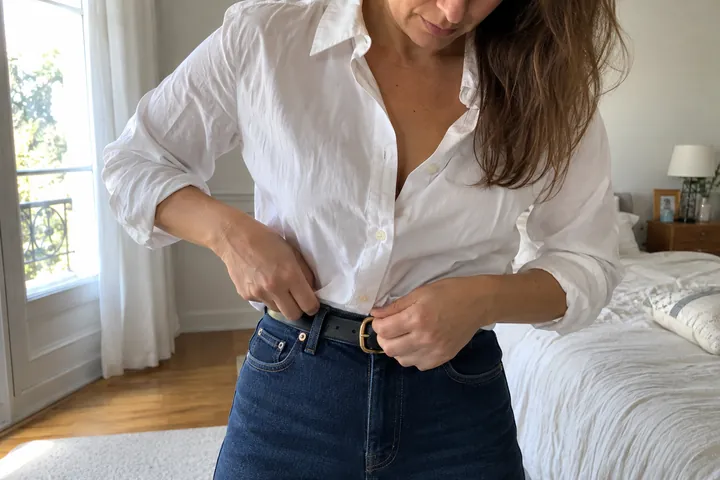
Check the blazer again with the layer you intend to wear. Our blazer fit guide helps distinguish a travel crease from pulling caused by the cut. A white shirt worn open or tucked can complete the outfit without adding another jacket to the case.
Frequently asked questions
Is it better to roll or fold a blazer?
For a structured woven blazer, start with a loose shoulder fold rather than a tight roll that compresses the chest and lapels. Softer unstructured jackets may tolerate other arrangements, but the care label and the jacket's construction matter more than a universal rule.
Can I put a blazer in a packing cube?
Only if the cube is roomy enough to hold the jacket without pressure. Do not use a compression cube simply to make a tailored jacket fit into a smaller space.
Will this prevent every wrinkle?
No. Fabric, construction, packing pressure and the time spent folded all affect the result. Leave space and allow time to unpack before you need to wear it.