Why loungewear gets a bad name
Most loungewear fails in one of two ways. Either it is so thin that it sags at the knees by noon, or it is so shapeless that it looks like an old uniform. Neither is a problem of comfort. Both are problems of fabric and fit.
A good set does three jobs. It feels soft against the skin, it keeps its line when you sit and stand, and it looks chosen when you step outside for a coffee or the mail.
Start with the fabric weight
Weight is the first thing to check, and it is easy to judge in the shop. Hold the fabric between two fingers and pull gently. If you can see the light through it, or if it stretches out of shape without springing back, it will look tired after a few wears.
For everyday loungewear, look for:
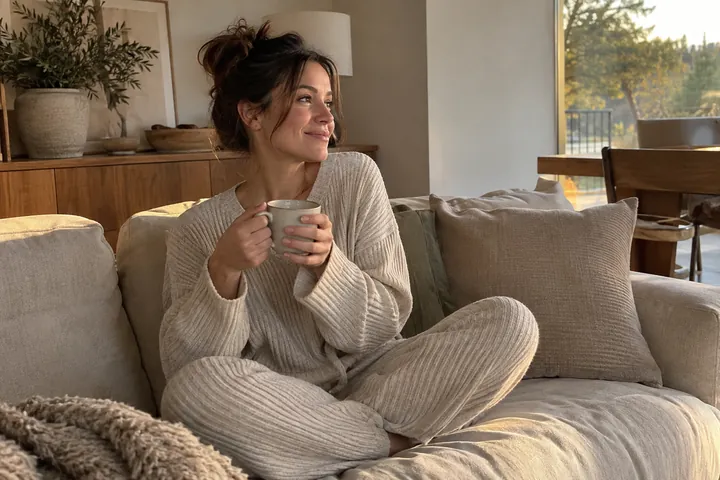
- Medium-weight knits, often described as ribbed, cable or fine-gauge. They hold their shape and feel substantial without being heavy.
- Structured jersey with some body, which works well for leggings and wide trousers.
- Brushed cotton or cotton-modal blends for cooler months, since they hold warmth without bulk.
- Linen blends for warm weather, though they wrinkle, so choose them for home rather than for travel.
Avoid very thin single-layer jersey for pieces you plan to wear outside. It shows the outline of underwear and sags at the seat and the knee.
Get the fit right at the shoulder and the leg
Loungewear does not need to fit like tailoring, but it needs a clear line. The most common mistake is buying a size up "for comfort," which produces a shapeless silhouette.
Check the shoulder first. The seam should sit close to the edge of the shoulder, not drop down the arm. A slightly oversized sweater can work if the shoulder seam is still in the right place.
Then look at the leg. Wide-leg trousers should skim the ankle without pooling. Straight or tapered pants should fall cleanly over the top of the shoe or the foot without bunching. If the leg has a cuff, the cuff should lie flat against the ankle.
Keep the colours in one family
A matching set looks intentional because the eye reads it as one piece. Two different tones, even close ones, look like a mistake. If you buy separates, choose a top and bottom in the same colour family, such as oat and camel, or grey and charcoal.
Neutrals are easiest. Oat, stone, sage, navy and black pair with almost everything you already own, and they hide small marks better than white.
Check the seams and the waistband
Pull the seams gently. If the stitches open or the overlock threads look loose, the garment will not last. A waistband should stretch without rolling. Look for a soft, flat band rather than a thick elastic that digs in after an hour.
Pockets are a small detail that makes a big difference when you are out. A pocket in the trousers or a zipped pocket in the jacket lets you carry keys and a phone without a bag.
Plan the washing before you buy
Loungewear is worn often, which means it is washed often. Read the label and the care symbols. Knits often need a cold wash and flat drying. Linen blends may need a gentle cycle and ironing to look fresh. If the care instructions ask for hand washing and you know you will not do it, choose something else.
A simple habit helps: wash the set inside out, in a mesh bag, and dry it flat on a towel. That keeps the surface smooth and the fabric's shape intact.
Make it look finished when you go out
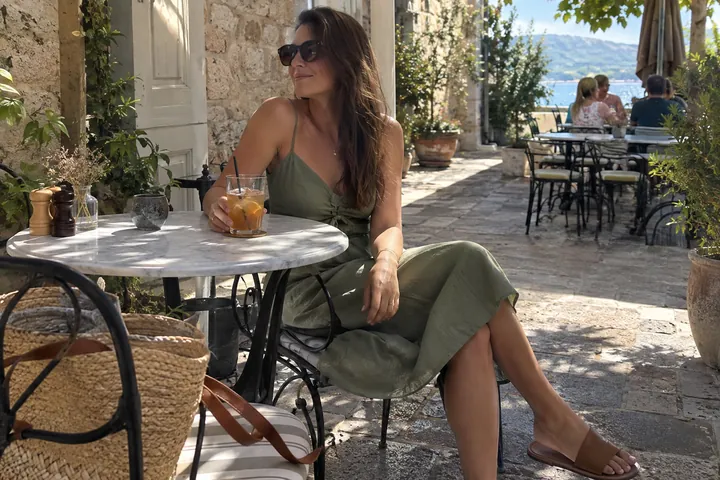
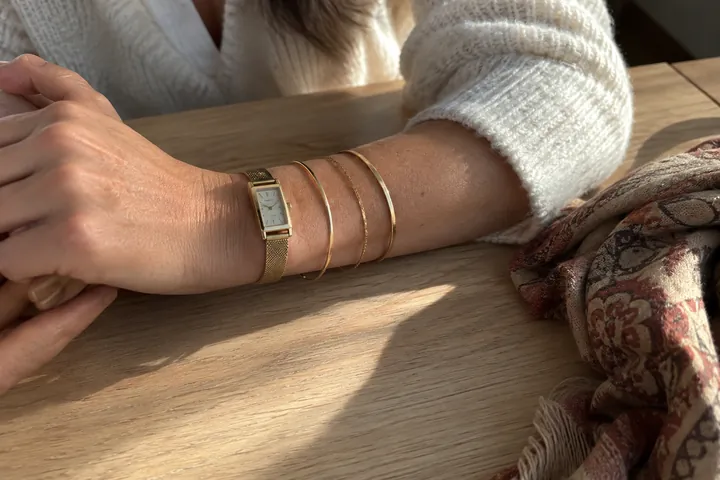
The difference between lounge and outdoors is a few small choices. Add a belt or a long cardigan to define the waist. Choose flat, clean shoes or simple slides. Wear a watch or a single piece of jewellery. A structured bag makes the whole look read as deliberate.
Loungewear fabric finder
Interactive toolChoose where you will wear the set and the climate. The result suggests a fabric and a care routine.
Loading the result. The guide above works without this tool.
What to avoid
Avoid a top and bottom in two different levels of wash, because the faded piece will look older than the other. Avoid prints that clash with each other. Avoid anything with visible logos if you want the set to look like something you chose, not something you were given.
Loungewear that looks put together is simply loungewear chosen with the same care you would give to a dress.
Frequently asked questions
What is the best fabric for loungewear that looks polished?
A medium-weight knit or a structured jersey. Both keep their shape after repeated wear and read as deliberate outside the house.
Should loungewear be fitted or loose?
Relaxed, with a clear line at the shoulder and the ankle. Very loose sets look like sleepwear, and very tight ones look like activewear.
How do I stop knits from pilling?
Wash inside out on a gentle cycle, avoid the dryer, and use a fabric shaver for the areas that rub, such as the inner arms.
Can I wear loungewear to run errands?
Yes, if the fabric has weight, the colours match and you add one or two finishing pieces.