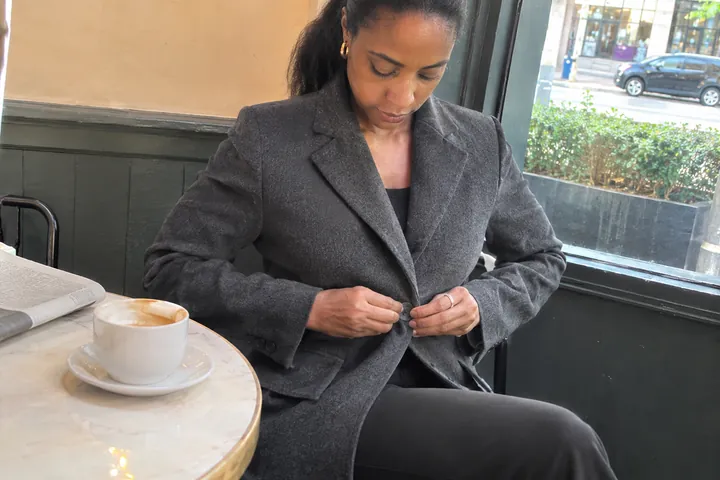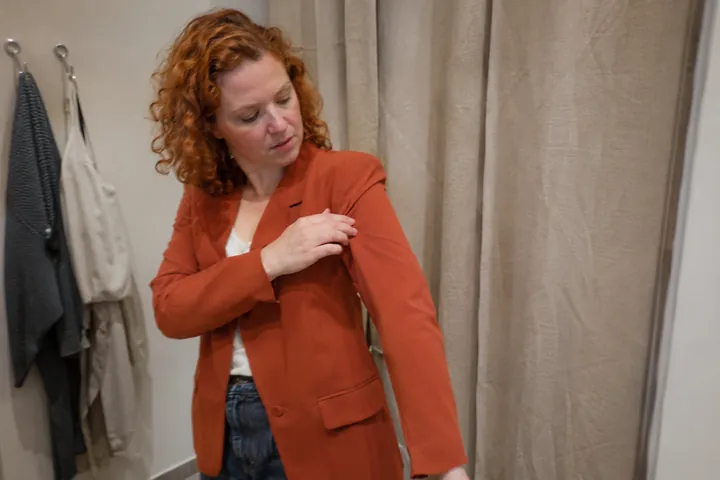
Start by locating the gap
A lapel is the folded section at the front of the jacket. A concern about that fold standing away from the chest belongs in a different note from a collar standing away behind the neck. Name the location first: left front, right front, upper fold or the area nearer the fastening. A clear description is more useful than a general verdict that the jacket looks wrong.
Put the blazer on over the shirt or knit you plan to wear. Let the shoulders settle and keep the pockets empty for the reference view. Leave the lapel in its natural position rather than flattening it with your hand for every photograph. The aim is to document what happens in the outfit you intend to use.
| Observation | Keep separate | Useful record |
|---|---|---|
| Front fold lifts away | Gap behind the neck | Front and side view at rest |
| Diagonal strain near the button | Lapel width or shape preference | Normal fastening state |
| Fold changes during a reach | Persistent resting concern | Before and after returning to rest |
| Different result over a knit | A confirmed construction diagnosis | The exact underlayer used |
Construction guidance needs its original context
Closet Core's Jasika fitting guide treats a gaping lapel as a specific fitting issue within its pattern-adjustment guidance. That is useful evidence that front shaping and fit deserve attention. It is not an instruction to perform the same adjustment on every finished ready-to-wear jacket.
A toile or pattern can be changed during making in ways that an already constructed garment may not allow. Ask what the actual jacket contains and what a proposed alteration would affect. Avoid assigning a repair from a single close-up, and do not use a general fitting illustration to promise that hidden seam allowance is available.
Compare open and normally fastened views
Look at the front with the jacket open, then normally fastened if that is how you intend to wear it. Do not force the fronts together. Note whether the lapel concern appears only in one state, and whether other areas change at the same time. Our button-pulling guide covers the separate question of strain around a closure.
Keep your stance ordinary. A raised phone, a hand in a pocket or shoulders deliberately pulled back can change the outline you are assessing. Use a timed photograph or another person's help where practical. If the concern disappears only while you hold a special pose, retain the relaxed view in your fitting note too.
Check the rest of the jacket
Use a wider view that includes the shoulders, sleeves and lower front. Our collar-gap guide helps locate a back-neck concern, while the vent comparison looks at the lower back. Do not combine several different folds into one guessed explanation.
Blazer fit check
Interactive toolTry the blazer on, then tick each point that is right. Eight points out of eight means the fit works.
Loading the result. The guide above works without this tool.
The checklist organizes observations; it cannot inspect internal construction. If you compare another size or cut, assess the whole replacement rather than choosing it solely because one lapel looks smoother. A jacket that solves the front concern but feels wrong elsewhere still leaves an outfit decision to make.
Bring an observation, not a preselected fix
At a fitting, show the ordinary resting view and explain which layer and fastening state you used. Ask whether the issue concerns fit, the intended design or the condition of this garment. Ask what any proposed work changes elsewhere. Do not pin the lapel down, move a button or press an unfamiliar fold as a substitute for that assessment.
For a new purchase, check the retailer's actual return and alteration conditions before changing anything. Keep an unresolved question visible in the decision. Choosing another cut can be a practical outcome; a plan to alter the first jacket is useful only when its scope has been assessed on that jacket.
Is lapel gape the same as a collar gap?
No. Locate the concern at the front fold or behind the neck and record it separately.
Does a lifted lapel prove the blazer is too small?
It is an observation to assess alongside the whole garment. One photograph cannot establish a unique cause or repair.
Should I press the lapel flat before a fitting?
Preserve the garment's state and follow its care instructions. Show how the concern appears naturally rather than concealing it for the photograph.