Name the length you mean
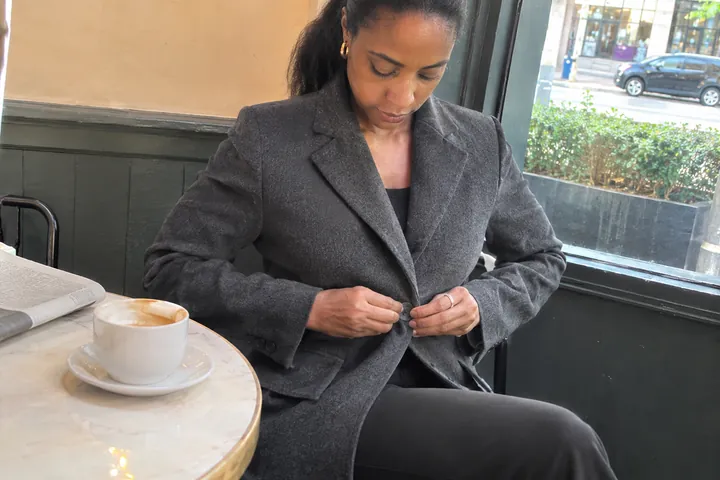
If the bottom of the jacket feels low, assess body length. If fabric covers your hands, assess sleeve length separately. A jacket can have the body length you want and sleeves that need attention. Rolling the cuffs changes the sleeve outline; it does not shorten the body or move its pockets.
Start with the whole-blazer fit checklist, then make a specific note: where does the hem fall, and what would you prefer in this outfit? Avoid a single rule that every jacket must end at one body landmark. Cropped, classic and longline designs aim for different outlines. The useful question is whether this design works for your clothes, movement and intended setting.
Compare the outfit under ordinary conditions
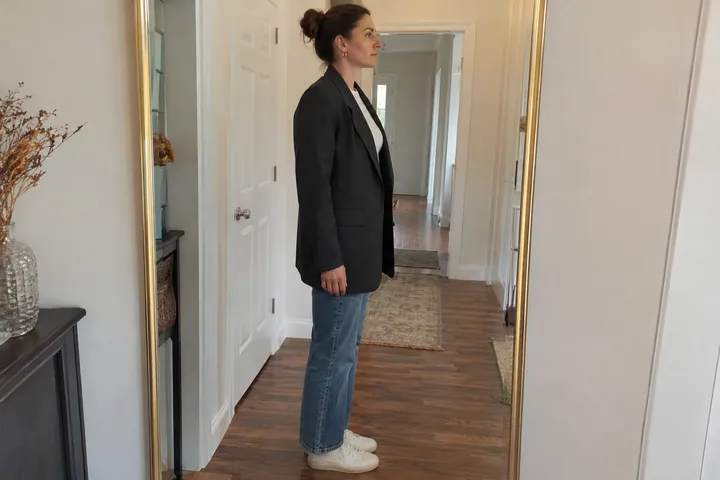
Wear the actual trousers, skirt or dress you plan to pair with the blazer. Keep the waistband at its normal position. Take front and side views with arms relaxed, and include the whole outfit rather than cropping the photograph at the jacket hem. Repeat with the jacket normally fastened if that is how you wear it.
Compare another cut if one is available. Change one garment at a time so that you can identify the difference. A shorter jacket over different trousers may be a good outfit, but it does not isolate the effect of jacket length. Record what you prefer rather than treating a photograph as a diagnosis.
| Question | What to compare | What it does not establish |
|---|---|---|
| Is the body longer than I want? | Whole outfit, same lower half | An alteration allowance |
| Are the sleeves covering my hands? | Arms relaxed, same underlayer | That the body needs shortening |
| Do I dislike the pocket position? | Pocket, fastening and hem together | That moving the hem moves the pockets |
| Is another cut easier to wear? | Whole replacement garment | That sizing down fixes every area |
Look at what would remain above a new hem
The lower edge belongs to a composition that includes pockets, buttons and back openings. AD Stitch's alteration guidance explains that shortening can disrupt those relationships. This supports a garment-specific assessment, rather than a promise that removing a chosen number of inches will produce a cropped design.
North Shore Alterations also identifies lining and vent construction as part of hem work. Ask what would need rebuilding and what would stay in its existing position. Our vent guide helps identify the back opening you are describing; it cannot tell you what is hidden inside your jacket.
Do not cut, press a new crease or temporarily glue up the edge to see whether the idea works. Bring the unaltered garment to the fitting. A tailor can demonstrate a proposed outline and assess whether the remaining details make sense together.
Keep styling preference separate from repair feasibility
The guest author in Corporette's suiting-alteration guide describes difficulty getting blazer body length altered. That personal experience and the alteration services' accounts show why a general yes-or-no answer is inadequate. They do not establish a universal maximum reduction, price or outcome for your jacket.
Blazer fit check
Interactive toolTry the blazer on, then tick each point that is right. Eight points out of eight means the fit works.
Loading the result. The guide above works without this tool.
For a new purchase, compare petite, regular or other available cuts by trying the whole garment. Their proportions may differ in several places. A smaller size that improves the hem but creates button strain leaves another unresolved concern. Keep the return conditions in mind before authorizing changes.
Leave a fitting with a concrete decision
Explain the outfit and the outline you want. Ask which parts would change, whether pockets and vents would remain balanced, and whether the proposed work affects the lining. Request the scope and quote for this garment rather than budgeting from an online example. If the answer is uncertain, compare a different jacket before proceeding.
You can also decide to keep a longline blazer for a different outfit. That is a wardrobe choice, provided it works comfortably and suits your preferences. The aim is a useful jacket, not a hem that matches an isolated measurement.
Does a long blazer mean I bought the wrong size?
Not by itself. Assess its intended cut and the whole garment; body length alone does not establish size.
Can every blazer be shortened?
Do not assume so. Construction, pockets, buttons and vents need assessment on the actual garment.
Should I shorten the sleeves and body by the same amount?
They are separate questions. Record each concern and ask what work the garment supports.