Start with the damage, not the replacement fabric
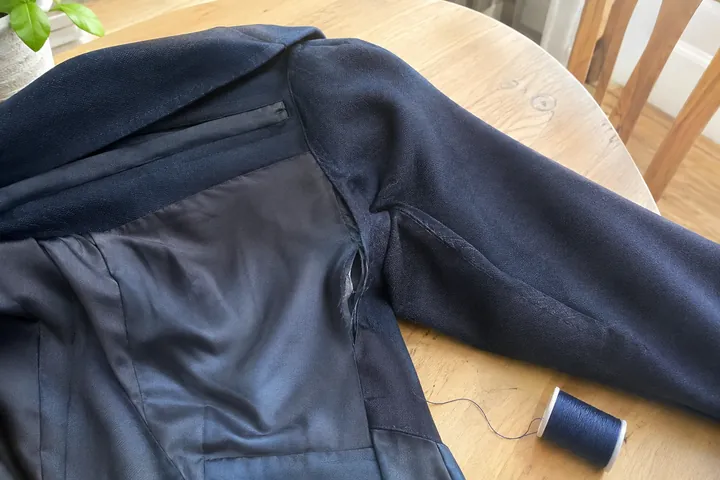
Lay the blazer open on a clean surface with its weight supported. Empty the pockets. Locate the opening and look at the edges without pulling them apart. A line of failed stitching between intact pieces is different from a jagged tear through a panel. Loose threads alone do not tell you which one you have.
Mark the position on a simple jacket outline: sleeve, underarm, center back, pocket or lower edge. Photograph the whole interior and a closer view with a ruler beside the damage. Keep adhesive labels off delicate fabric. Record what you can see, and leave the construction diagnosis to the person inspecting the jacket.
The lining coverage comparison helps identify the areas a partially lined blazer actually covers. An exposed seam in an intentionally unlined section is not automatically missing lining.
Is the surrounding fabric sound?
Compare the damaged area with a protected area of the same lining. Look for thinning, repeated splits, fraying and a patchwork of earlier repairs. Do this in good light with the cloth relaxed. Do not tug at a weak edge to test its strength; that can enlarge the job.
| What you see | What to show the tailor | Question to ask |
|---|---|---|
| Open seam, apparently intact panels | Both edges and the surrounding seam | Can the seam be restored with adequate allowance? |
| One tear inside a panel | Tear and a wider view of the panel | Is a supported local repair appropriate? |
| Several weak areas | Every affected section, not just the largest hole | Would panel or full replacement last better? |
| Damage beside an inner pocket | Pocket opening and surrounding lining | Does the pocket need rebuilding as part of the work? |
These observations help describe the job; they do not establish that a patch will hold. Outer fabric damage needs its own assessment. A new lining cannot restore wool that has worn through at the elbow.
Could movement be contributing to the split?
If the opening is small and trying on the blazer will not worsen it, wear the usual shirt and reach gently forward. Stop if the lining strains or the tear grows. Note whether the outer jacket also pulls or whether the lining alone seems to restrict the movement. A photograph at rest and a description of the activity are enough; no need to demonstrate the failure repeatedly.
Tell the fitter about any previous waist or sleeve alteration. Ask whether the lining has enough movement allowance for the present jacket. Closing a split without addressing a persistent restriction may leave the same area under load. Use the basic blazer fit sequence to keep observations about the outer shell separate from lining damage.
What does a repair quote need to include?
Ask for the proposed scope in plain terms: re-stitching, reinforcement, replacement of one panel, sleeve linings, or a complete reline. Request the fabric, pocket work, fitting and finishing as explicit parts of the quote. Confirm whether the old lining will be retained where sound and whether any interior labels will be preserved.
De Oost's alterations list separates sleeve linings from body relining and distinguishes work with and without pockets. That is useful evidence that “lining replacement” is not one uniform service. Its listed prices are that business's terms, not an estimate for your blazer.
Similarly, Perrone's jacket repair form distinguishes back-only replacement from an entire lining. It concerns that maker's leather apparel service, so use it to understand scope rather than transferring its construction or price to a wool blazer.
Make a repair decision you can revisit
Create two columns: what the blazer already does well, and what the proposed work would change. A fictional example might read: outer wool sound, favorite shoulder fit, one sleeve lining split; repair quote includes both sleeve linings but leaves body lining intact. A second jacket with widespread thinning would need a different quote, even if its most visible hole were smaller.
Add the actual repair quote and any required cleaning to the cost of keeping the garment. Leave missing figures blank. Compare the likely use of the finished blazer with a replacement you would truly wear, rather than with an imaginary sale bargain. Your capsule wardrobe plan can show whether this is a central piece or a duplicate.
Until the appointment, avoid carrying heavy objects in an affected pocket or repeatedly wearing the blazer through a growing split. Support it on an appropriate hanger and follow its care label. At collection, check the inside finish, put on the usual layer and repeat your ordinary reach. Confirm that the repaired area lies comfortably before considering the job complete.