Start by identifying the shoulder the designer intended
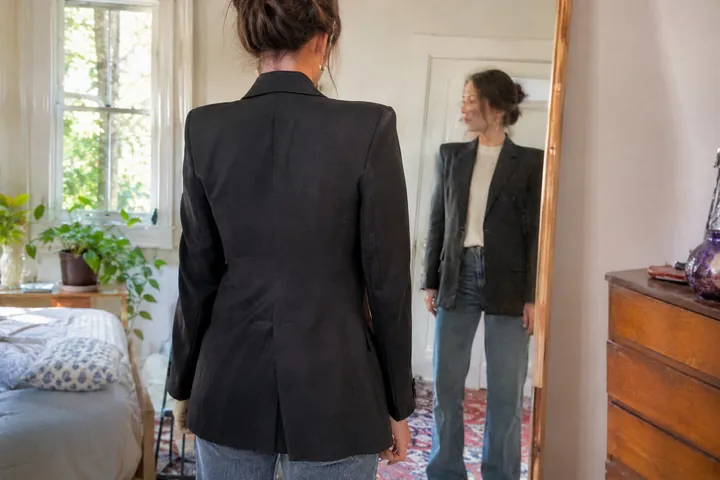
A close tailored shoulder, a padded extended shoulder and a soft dropped shoulder do not aim for the same outline. Find a photograph or description of the exact model, preferably showing its back and side. Check whether the seam is intended to sit near the shoulder edge or lower on the upper arm. A seam farther out is not sufficient evidence that the whole jacket is too big.
Suitsupply's jacket fit guide illustrates the difference between structured and natural shoulders within its own designs. Use those examples to recognize construction choices, not to apply one brand's proportions to every women's blazer. Padding, fabric and sleeve shape all affect what you see.
For the wider fitting sequence, use the blazer fit guide. Shoulder width belongs alongside collar contact, chest room and comfortable movement. Solving a photograph of the shoulder while making the chest uncomfortable is not a successful size change.
Look for support and collapse while standing normally
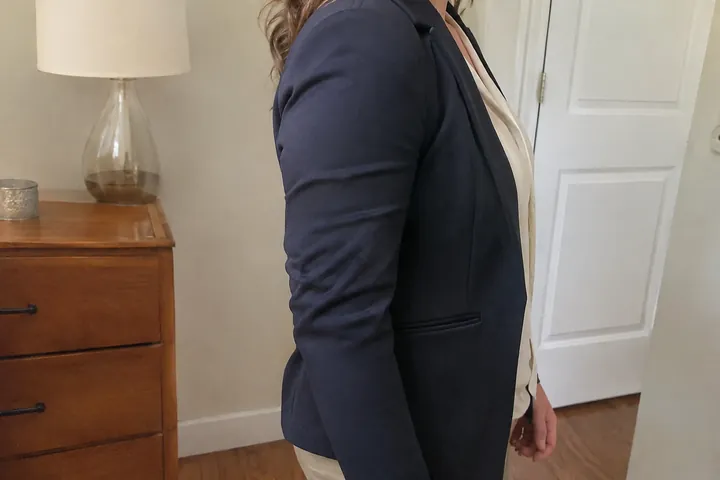
Put on the intended shirt or thin knit and empty the jacket pockets. Let the blazer settle with your arms relaxed. Take front, back and side photographs at a consistent height. Avoid pushing the shoulders back or holding your arms away from your body to improve the picture. Repeat any observation after an ordinary short walk.
Look at the transition between the shoulder and sleeve. Does it form a stable line, or does the outer edge sag with a hollow beneath it? Does excess cloth collect below the sleeve head? Proper Cloth's shoulder-width explanation describes collapse and dimpling in its tailored jackets. Those clues invite comparison; they do not establish one diagnosis in every cut.
A dent can also relate to sleeve construction, shoulder shape or the way the jacket sits. The shoulder-divot guide separates those observations. Do not assume removing padding will fix a width problem. The sleeve and shoulder were built around the existing structure.
Use this comparison before trying a smaller size
| What you observe | Useful comparison | What to avoid concluding |
|---|---|---|
| Extended line that stays smooth and comfortable | Exact model's intended silhouette | Every outward seam is a sizing error |
| Edge droops and upper sleeve folds inward | Another cut with a narrower shoulder | Waist suppression alone will repair it |
| Narrower size looks neater but chest pulls | Same size in another shoulder shape | Smaller is necessarily better |
| One side collapses more than the other | Relaxed photographs from front and back | Both sides need identical surgery |
| Fold appears only over a bulky sleeve | Same jacket over a smooth thin layer | Jacket width is the only variable |
Keep the underlayer, fastening state and camera position constant when comparing two jackets. Otherwise you may be comparing a different outfit or posture rather than the cut. If possible, compare a different model as well as a neighboring size. Record comfort separately from whether you like the silhouette.
Does ordinary movement change the decision?
Reach forward modestly, sit as you would at a desk and bring one hand toward your face. Return to rest and let the jacket settle. Some folds during movement are expected. The useful question is whether the jacket permits the activities you need and returns to a shape you enjoy without continual adjustment.
Notice whether the collar lifts or the whole body rises when you reach. Keep those observations separate from the resting shoulder outline. If the sleeve itself twists while the shoulder rests smoothly, the sleeve-pitch checks may describe the concern more accurately. Avoid a forced overhead stretch as a pass-or-fail fitting test.
Can a tailor narrow blazer shoulders?
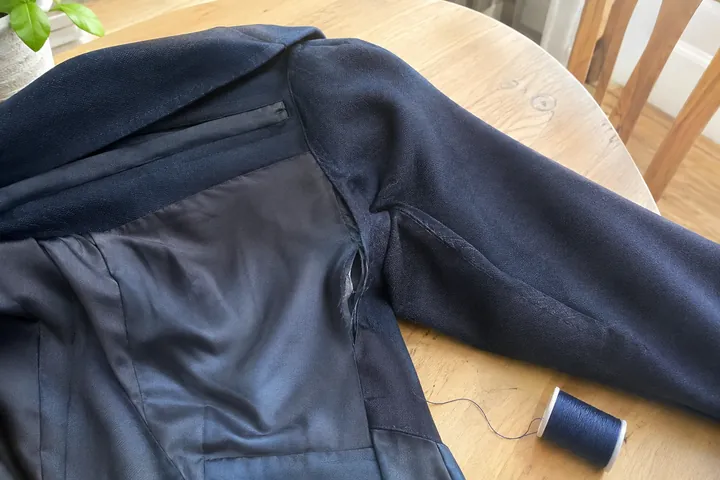
Sometimes a specialist can reconstruct them, but it is substantial work rather than a simple seam adjustment. The alteration can affect the sleeve head, armhole, lining and balance of the upper jacket. Proper Cloth's alteration guide treats shoulder-width changes as complex work. Its limits for its own garments are not guaranteed allowances for yours.
Ask the tailor to inspect the jacket before giving a price or promising a result. Bring the intended layer and your comparison photographs. Ask which parts would be opened, how the sleeve would be reset, and what a fitting would show before completion. Compare that proposal with choosing a different cut, especially if the jacket is still returnable.
Leave the fitting with a specific decision
Write a short record with four entries: intended design, resting observation, movement observation and comparison jacket. For example: extended shoulder by design; stable outer line; comfortable desk movement; narrower model preferred visually but tight at the chest. That record points toward trying another model rather than automatically sizing down.
Keep an intentionally oversized jacket if its shape works for you and the movement is comfortable. Seek advice when the structure collapses or a repair would require opening the shoulder. You do not need an arbitrary seam-to-bone measurement to decide that a silhouette is not the one you want.