Find where the sleeve first feels restrictive
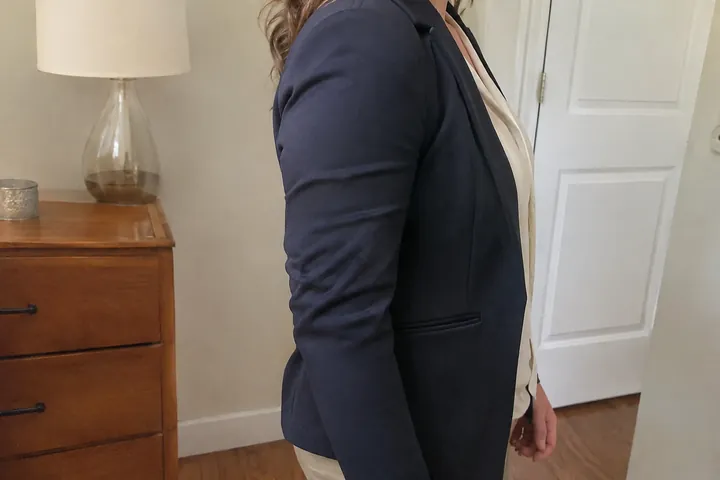
Start with the intended shirt or thin knit, not an unusually light layer chosen just to make the blazer fit. Empty the pockets and let the jacket settle without tugging the hem. Note whether pressure sits around the upper arm, at the elbow, across the back or where the arm joins the body. Keep left and right observations separate.
Stand with your arms resting naturally. Horizontal strain around the biceps is a different observation from diagonal twisting down a sleeve. For the latter, compare our sleeve-pitch checks. A crease is evidence to record, not a complete diagnosis. Shoulder width and sleeve placement can affect the picture too.
The overall blazer fit guide provides the wider context. If the collar, chest and shoulders are also uncomfortable, widening a sleeve alone may leave most of the problem unresolved. A different jacket cut can be the more sensible comparison before you authorize structural work.
Use the same three movements for each jacket
Try a normal seated typing position, reach forward as if taking a cup from a table, and bend your elbow to bring a hand toward your face. Stay within ordinary comfortable movement; forcing an overhead stretch does not help a fitting. Repeat with the front unfastened and fastened as intended for that design.
Record the results as a small movement log rather than a single pass or fail. For example, “comfortable at rest; pressure at right elbow while typing; unchanged when unbuttoned” gives the fitter a repeatable situation. “Too small” conceals where the restriction begins. This is an observation method, not a laboratory test or a universal fit standard.
| Where restriction appears | Comparison to make | What it cannot prove |
|---|---|---|
| Upper arm at rest | Same jacket over a thinner, smooth layer | That enough seam allowance exists |
| Only when elbow bends | Relaxed and bent elbow at the same cuff position | That sleeve length is the cause |
| Underarm and back together | Jacket fastened and unfastened | That the armhole should simply be lowered |
| One isolated snag | Inspect the corresponding lining area | That the whole sleeve is too narrow |
Rule out lining and underlayer drag
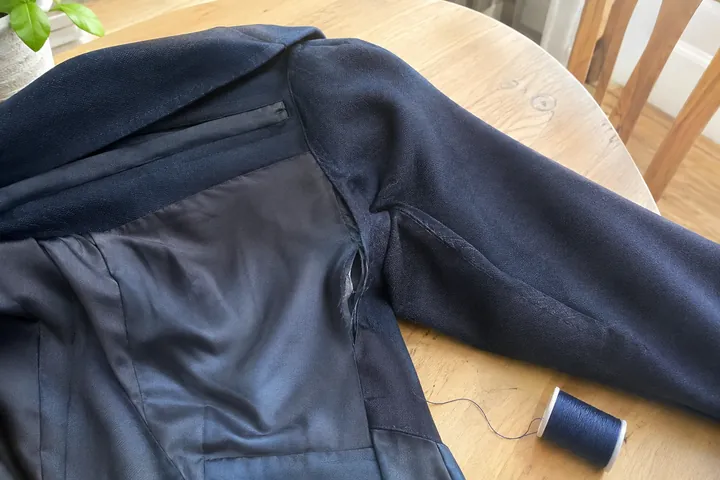
Take the blazer off before inspecting its interior. Look for an open lining seam, a loose edge caught at a shirt button or an inner cuff that has twisted. Avoid pulling the shirt through a snag. Our lining edge identification guide helps separate the shirt cuff from the jacket's inner layer.
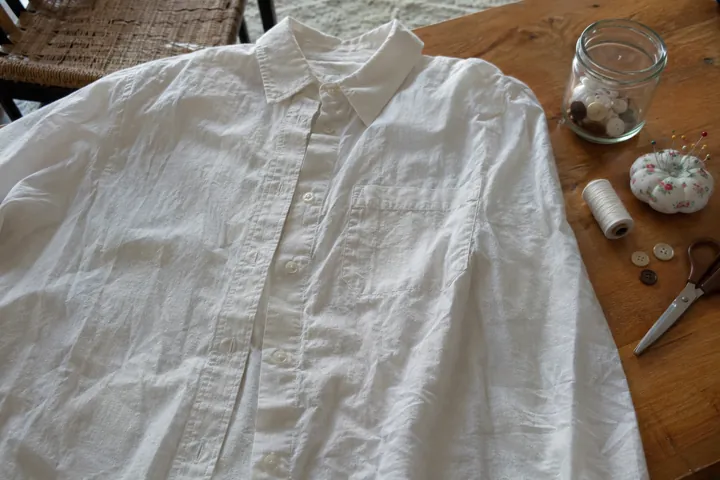
Compare one smooth thin shirt with your usual layer while keeping the jacket and movements unchanged. If the restriction disappears, record the layer that triggers it. That does not mean you must stop wearing your preferred knit: it means the blazer needs to accommodate that outfit if it is to serve that purpose. Stretch in the outer cloth also does not guarantee matching stretch in the lining.
Can a tailor let the sleeves out?
Sometimes, but the available fabric and construction set the limit. Proper Cloth's alteration guidance describes a modest widening allowance for its own jackets. Those specifications do not transfer to an unrelated vintage blazer or a jacket whose seams have already been let out. Ask for inspection of both sleeve seams and lining before accepting a promise.
The maker's advanced fit guidance also explains that chest restriction can contribute to tension at the back and underarms. Keep that possibility separate from a tight biceps measurement. Lowering an armhole is not a general shortcut to better mobility, and the effect depends on the sleeve and body together.
What should you ask at the fitting?
Bring the actual underlayer and your movement notes. Ask which area needs room, whether the lining also needs work, what allowance remains and whether the result can be basted for a second try-on. Request the scope and price after the jacket has been examined. Do not cut a lining open at home to investigate an unknown allowance.
If you are choosing between sizes, compare shoulder and chest balance as well as sleeve comfort. Our wide-sleeve guide covers the opposite problem without assuming every larger sleeve should be narrowed. The useful goal is a jacket that allows the movements you actually need and still hangs well when your arms rest.